
- Why Financial Branches Struggle With Consistent Communication
- What Email-to-SMS Is and How It Unifies Branch Messaging
- How to Implement Email-to-SMS Across Multiple Branches
- Benefits of Standardized SMS Communication for Financial Institutions
- Best Practices for Multi-Branch SMS Messaging in Financial Services
- Unify Your Branch Communication Without Adding Complexity
- Frequently Asked Questions
One Number. Every Branch. Zero Confusion.
How Financial Institutions Use Email-to-Text to Standardize Branch Communication

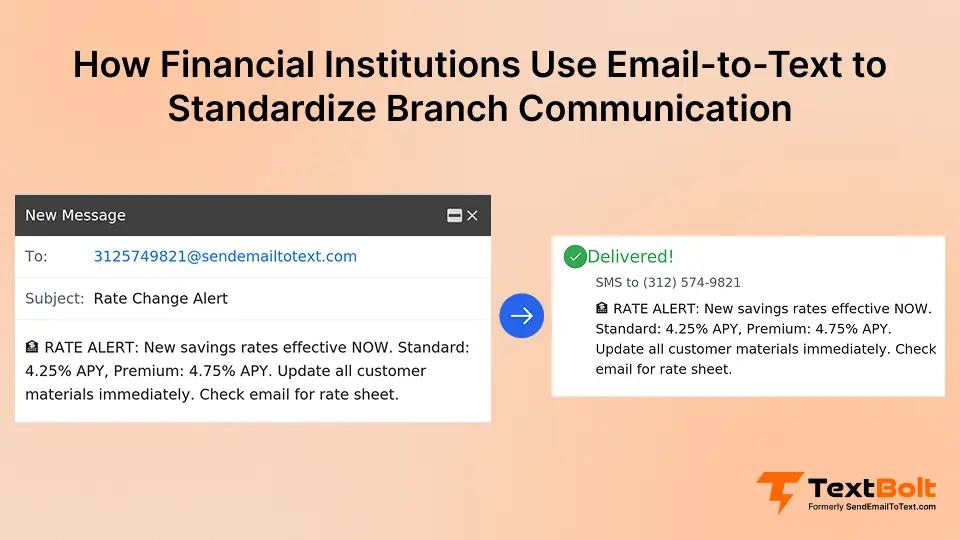
When every branch sends client messages differently, your financial institution looks disorganized. One location texts appointment confirmations. Another calls. A third sends nothing at all.
This inconsistency frustrates clients and creates compliance gaps. Customers who visit multiple branches get a fragmented experience that erodes trust and raises questions about your institution’s reliability.
The fix does not require a massive technology overhaul. With email-to-SMS service, every branch sends standardized text messages from their existing work email. No new software, no training, and no variation in how your brand communicates.
Here is how to bring consistency to your multi-branch messaging.
Why Financial Branches Struggle With Consistent Communication
Branches default to whatever communication method is most convenient locally. This creates a patchwork of texting habits, tools, and response times across your organization.
Most financial institutions using business SMS do not set out to communicate inconsistently. The problem grows gradually as each branch develops its own habits and workflows.
1. Each Branch Picks Its Own Tools
Without a centralized texting system, branches improvise. One branch manager texts clients from a personal cell phone. Another relies on the branch landline. A third avoids texting entirely.
This creates an uneven client experience. A customer at your downtown branch gets a text reminder before their wealth management review. The same customer visiting your suburban branch gets nothing.
Personal phones create a secondary problem. When a teller or relationship manager transfers or resigns, their entire conversation history disappears with them. There is no continuity for the next staff member.
2. Response Times Vary Wildly
Some branches respond to client inquiries within minutes. Others take hours or never respond at all. Without shared visibility, branch managers and compliance officers have no way to monitor response patterns across locations.
Clients notice this. A customer who gets a prompt reply from one branch expects the same from every branch. Inconsistent response times make your institution feel disjointed and unprofessional.
The absence of a business messaging platform means no one at the organization level has oversight into how quickly branches engage with clients.
3. Compliance Gaps Multiply With Every Undocumented Message
Financial services require thorough documentation of client communications. When branches text from personal devices, there is no audit trail. FINRA and SEC record-keeping requirements apply to client communications regardless of the channel used.
Regulatory reviews become stressful when you cannot produce records of what was communicated, when, and by whom. Each undocumented text is a potential compliance risk that could result in fines or enforcement action.
Standardizing on one system solves this by logging every message with timestamps, sender identification, and delivery status, giving compliance officers a complete record at any time.
| Communication Method | Audit Trail | Multi-Branch Consistency | Client Experience |
| Personal cell phones | None | Low | Inconsistent |
| Branch landlines (calls) | Minimal | Medium | Slow |
| Email-to-SMS | Complete | High | Professional |
These three problems feed each other. Disconnected tools lead to inconsistent responses, which create compliance gaps that put the institution at risk. A single centralized approach addresses all three at once.
What Email-to-SMS Is and How It Unifies Branch Messaging
Email-to-SMS is a messaging method that lets every branch send professional text messages from their existing work email, creating a unified communication standard across all locations without new software or IT overhead.
Here is how it works. A branch employee composes a regular email in Gmail, Outlook, or any email client. They address it to the client’s phone number using a format like 5551234567@sendemailtotext.com.
The email converts to a standard SMS and arrives on the client’s phone from your shared business number. The client sees a professional message from a recognizable number, not a random personal cell.
Unlike phone-based texting where each branch uses a different device, email-to-SMS routes all messages through one system. Every branch sounds the same to clients, whether the message is a loan processing update, a portfolio review reminder, or a routine account notification.
Replies come back as standard emails in your inbox. Any authorized team member at any location can continue the conversation without switching apps or learning new software. This means your newest teller and your most experienced branch manager follow the exact same process to reach clients.
The compliance benefits are built into the workflow itself. Every message passes through your email system, creating an automatic record. The TextBolt dashboard adds a second layer of documentation with delivery status, timestamps, and sender identification for every message sent across the organization.
Before going further, consider the specific mechanics of how each branch connects to the same system and what the setup actually looks like in practice.
Your Branches Should Sound Like One Team
Send every client message from your shared business number. No apps to install, no training required.
How to Implement Email-to-SMS Across Multiple Branches
Email-to-SMS standardizes branch communication by routing all text messages through one shared system that every branch already knows how to use: email. The process works the same way at every location, which eliminates the variation that causes inconsistency.
Step 1: Connect Your Branch Staff Through Existing Email
Each branch manager and team member gets access through their existing work email. TextBolt supports Gmail, Outlook, and any SMTP email client.
All plans include 10 user accounts with no per-user fees. You can add staff across multiple locations without paying extra for each person, and you do not need separate accounts or software licenses for each branch. One TextBolt account covers your entire organization.
Step 2: Build Shared Templates for Common Financial Workflows
Branch staff compose a regular email and address it to the client’s phone number at sendemailtotext.com. Everyone uses the same format and the same process.
Create template emails for common scenarios such as appointment confirmations, loan status updates, portfolio review reminders, and account notifications. Every branch sends the same professional message every time, regardless of who is sitting at the desk.
Step 3: Deliver All Messages From One Business Number
Regardless of which branch sends the message, clients receive it from your single shared business number. This builds recognition and trust over time.
Clients do not see a random personal number or an unfamiliar sender. They see your institution’s dedicated toll-free number every time, from every location, reinforcing brand consistency with each interaction.
Before implementing, it helps to see how the message history looks across branches. TextBolt’s SMS History Dashboard gives management a consolidated view of all outbound communication.
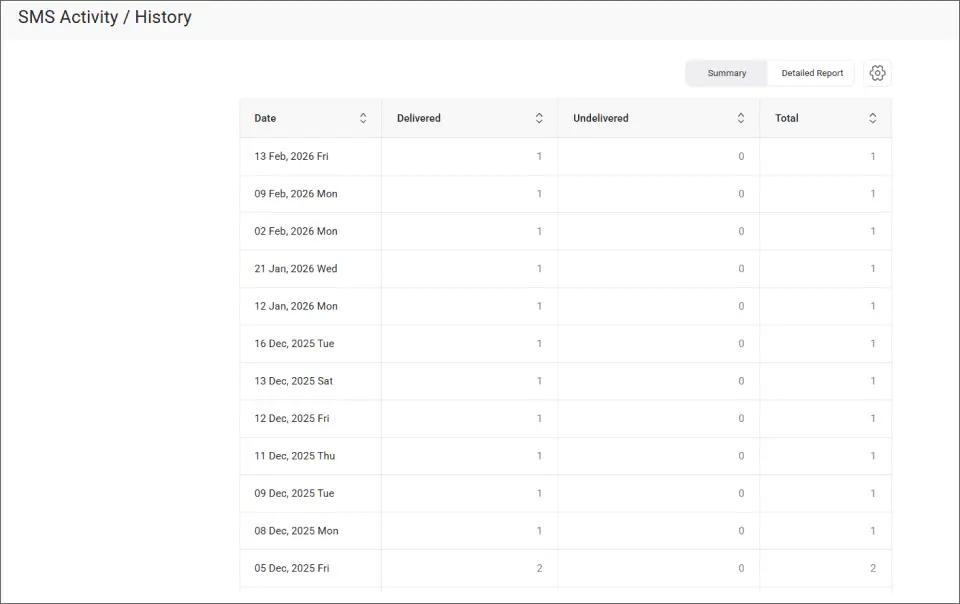
The summary view shows total messages sent, delivery rates, and activity across all senders. For multi-branch institutions, this single screen replaces scattered personal phone records and gives compliance officers a starting point for any audit.
With visibility into aggregate activity established, management can also drill into individual messages when needed.
Step 4: Manage Replies Without Messages Getting Trapped
When a client responds, the reply arrives as an email in the sender’s inbox. Any authorized team member can view and continue the conversation.
This eliminates the problem of messages being trapped on one person’s phone. If a branch employee is out sick or leaves the organization, another staff member can pick up right where they left off without losing context.
Step 5: Monitor Branch Activity From a Central Dashboard
The TextBolt dashboard shows message history, delivery status, and sender details for every message across all branches. Management gets centralized visibility into all client communication without having to contact each location individually.
For granular review, the filtering tools let compliance officers and branch managers isolate messages by date range, delivery status, or keyword, which is useful during internal audits or when responding to a client dispute.
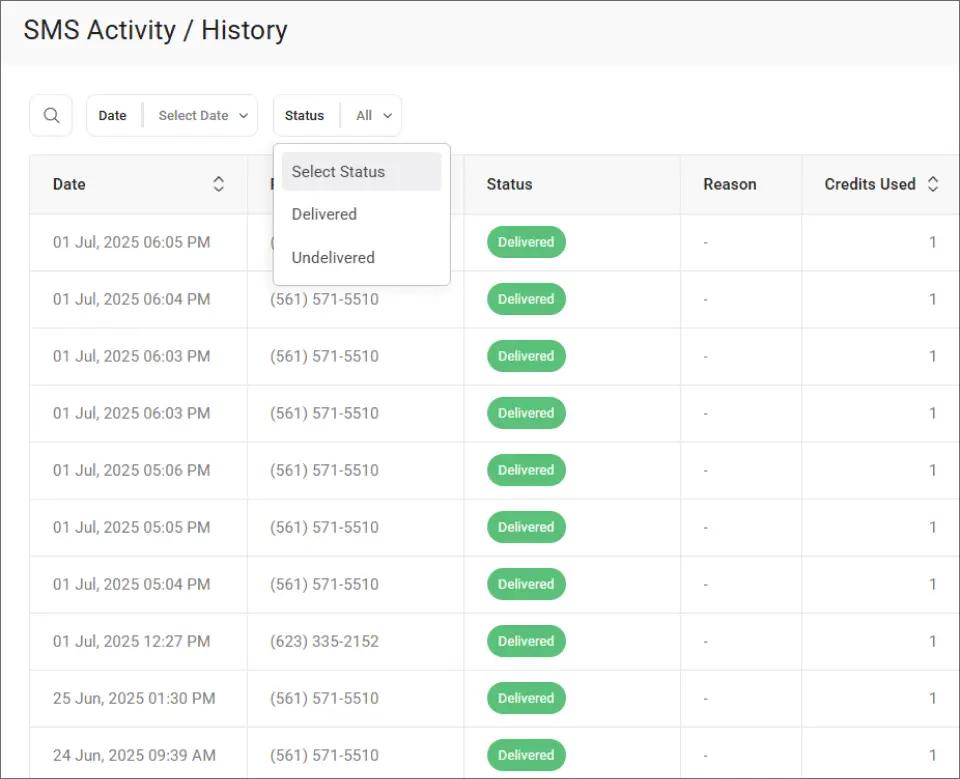
Filtering by delivery status quickly identifies messages that did not reach the client, which is particularly important for time-sensitive communications like loan closing reminders or regulatory disclosure notices.
With these steps complete, every branch follows the same process. The result is a client experience that feels consistent no matter which location they visit.
Benefits of Standardized SMS Communication for Financial Institutions
Standardizing on email-to-SMS gives financial institutions consistent client messaging, better compliance records, and team continuity across every branch. The advantages go beyond sending texts the same way.
1. Consistent Client Experience Across All Locations
Clients interact with your brand, not individual branches. When every location sends messages from the same business number using the same format, clients get a consistent experience regardless of which location they visit.
A customer who opens accounts at your main branch and visits a satellite office for a loan consultation receives the same professional communication at both locations. That consistency builds trust and reinforces your institution’s reliability.
2. Complete Audit Trail for FINRA and SEC Compliance
Every message is logged in your email account with full timestamps, sender identification, and delivery confirmation. This documentation is essential during regulatory reviews and client dispute resolution.
Instead of scrambling to reconstruct what was communicated, compliance officers can pull complete records quickly. The dashboard adds a second layer of tracking with delivery status for every message sent across the organization.
3. Team Continuity When Staff Changes
When a branch employee leaves, transfers, or is unavailable, their communication history stays in the system. The replacement picks up conversations without losing context or asking clients to repeat themselves.
This eliminates the single point of failure that personal-phone texting creates. Client communication never depends on any one person being present or available.
4. Faster, More Reliable Client Responses
Text messages reach clients faster than phone calls and get read more quickly than emails. Most SMS messages are read within minutes, so appointment reminders, portfolio update notifications, and account alerts actually get seen.
With up to 98% delivery rates*, your messages reliably reach clients when they matter most. That is significantly better than voicemail, which many clients never check, and far more immediate than email for time-sensitive financial communications like alerting clients during system downtime or urgent account changes.
5. Lower Cost Than Enterprise Financial Messaging Platforms
Enterprise SMS platforms built for financial services often cost $300 or more per month and require weeks of implementation and IT involvement. TextBolt’s pricing plans start at $29 per month with setup in under 30 minutes.
All plans include 10 user accounts, so you can spread access across branches without per-user fees. That is a significant advantage over platforms that charge $10 to $20 per additional user, costs that add up quickly across a multi-branch organization.
Give Every Branch the Same Communication Power
Standardize client messaging across all your locations. Set up in under 30 minutes with no new software to learn.
Best Practices for Multi-Branch SMS Messaging in Financial Services
The most effective multi-branch SMS programs combine message templates, clear ownership rules, and consistent timing to deliver a unified client experience. Getting the technology in place is step one. These practices ensure your branches use it effectively.
1. Build Templates for Core Financial Workflows
Draft standard templates for appointment reminders, loan status updates, portfolio review confirmations, payment reminders, and compliance disclosure notices. Distribute these to every branch and designate them as the approved communication standard.
Templates ensure a client receives the same professional tone whether the message comes from your flagship downtown location or your smallest satellite office. Keep templates under 160 characters when possible to use one message credit per send.
2. Assign Clear Ownership for Each Message Type
Designate who at each branch is responsible for sending specific types of messages. This prevents both gaps and duplicate outreach that can confuse or frustrate clients.
For example, front desk staff might handle appointment reminders while relationship managers own portfolio update notifications. Loan officers might send processing status updates while branch managers handle escalated client concerns. Clear roles prevent messages from falling through the cracks.
3. Set Consistent Timing Standards Across Locations
Standardize when each type of message goes out. Appointment reminders might go 24 hours before the scheduled time. Payment reminders might go three days before the due date. Loan status updates might go within one business day of a status change.
Consistent timing trains clients to expect your messages and makes scheduling easier, since branches follow the same communication playbook. You can schedule SMS from Gmail to automate timing across every location without manual coordination.
4. Review Branch Activity Regularly
Use the TextBolt dashboard to review message volume and delivery status across branches. If one location sends significantly fewer messages than others, investigate whether staff are following the communication standard.
Regular reviews help you spot branches that have reverted to personal phones or inconsistent practices. They also reveal which message types generate the best client responses, giving you data to refine your templates over time.
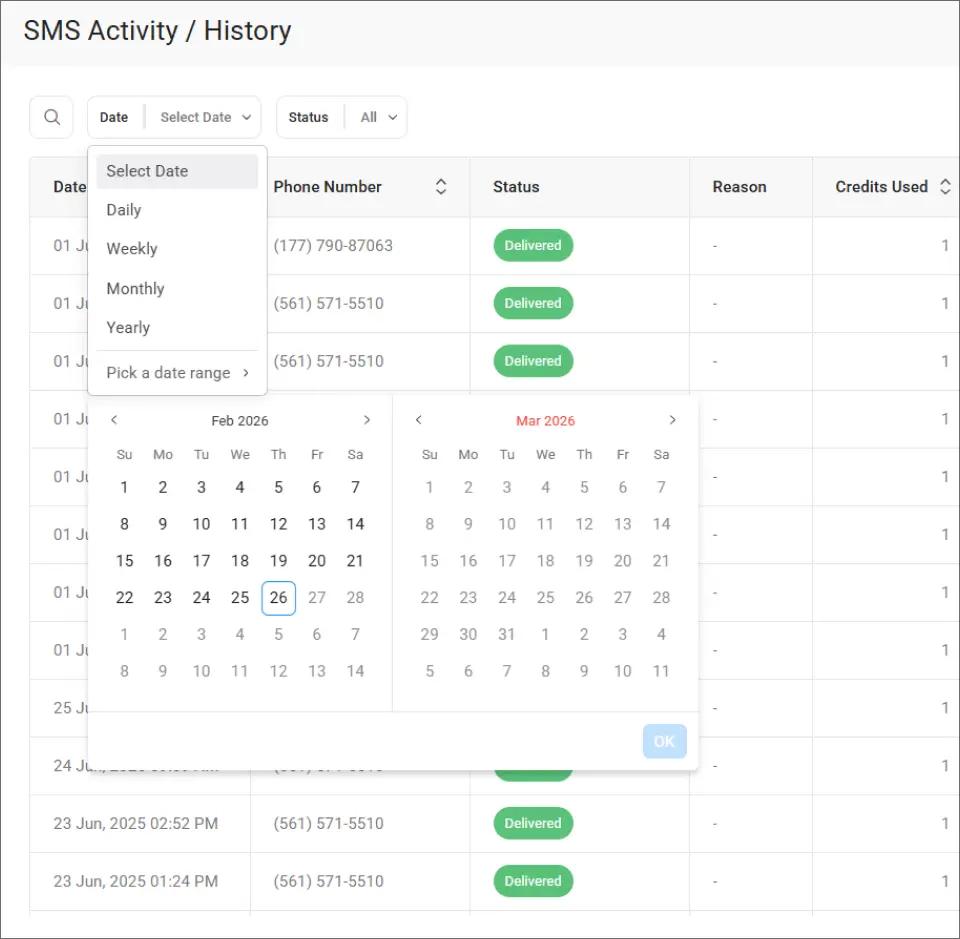
Date range filtering lets you compare branch activity week over week or month over month. A branch that goes quiet during a busy loan processing period is worth a closer look.
5. Keep Every Message Compliant and Professional
Every text should identify your institution by name. Avoid slang, excessive abbreviations, or casual language that could undermine client trust or create regulatory questions.
Include opt-out language where required by Telephone Consumer Protection Act (TCPA) regulations. TextBolt includes built-in STOP keyword support, so clients can opt out at any time without manual handling from your staff.
| Best Practice | Why It Matters | Implementation Difficulty |
| Message templates | Ensures consistent tone across branches | Low |
| Clear ownership | Prevents gaps and duplicate messages | Low |
| Timing standards | Builds client expectations | Medium |
| Activity monitoring | Catches non-compliance early | Low |
| Professional language | Maintains brand trust and regulatory standing | Low |
These practices work together to create a communication system that scales across any number of branches without adding management complexity.
Unify Your Branch Communication Without Adding Complexity
Inconsistent branch messaging erodes client trust and creates compliance risk. Email-to-text eliminates both problems by giving every branch the same simple tool built around the email workflow they already use every day.
Your team already knows how to send email. That is all they need to know. One shared business number, one process, and one audit trail across every location, from your main branch to your most remote satellite office.
Over 500 businesses trust TextBolt to deliver professional SMS from existing email systems. Set up TextBolt in under 30 minutes and start unifying your branch communication today.
Frequently Asked Questions
Can multiple branches send messages from the same business number?
Yes. Every branch sends texts from your shared dedicated business number through their individual email accounts. Clients see one consistent number regardless of which branch sends the message.
How many team members can use one TextBolt account?
All TextBolt plans include 10 user accounts with no per-user fees. One admin and nine individual users can send and receive messages from a shared credit pool.
Do I need IT support to set up email-to-SMS at each branch?
No. Setup takes 10 to 30 minutes and requires no technical skills. Any staff member who can send an email can use the system immediately after 10DLC approval.
Can branch managers see what messages other branches send?
Yes. The TextBolt dashboard shows message history, delivery status, and sender details for all messages sent across the account. Email records provide an additional audit trail for compliance purposes.
What happens if a branch employee leaves?
Communication history stays in your email system and dashboard. The replacement staff member uses their own email to continue client conversations without any disruption to the client relationship.
Is email-to-SMS compliant with financial communication regulations?
TextBolt includes 10DLC compliance, built-in opt-out handling, and complete message logging. Consult your compliance team to ensure the solution meets your specific FINRA, SEC, and TCPA requirements.