
- How We Evaluated Each Email to SMS Service
- Email to SMS Providers at a Glance
- Detailed Evaluation of Each Provider
- 1. TextBolt: Best Overall for Business SMS and Email to SMS
- 2. ClickSend: Best for Pay-as-You-Go Pricing
- 3. Twilio: Best for Developers and API Control
- 4. Textmagic: Best for Small Business Simplicity
- 5. Notifyre: Best for Two-Way Email to SMS Threads
- 6. SlickText: Best for SMS Marketing Integration
- 7. Ozeki SMS Gateway: Best On-Premise Solution
- 8. Plivo: Best for Developer-Friendly SMS at Scale
- 9. EZ Texting: Best for Bulk Email to SMS Campaigns
- 10. Sinch: Best for Enterprise-Grade Global SMS
- Feature Evaluation Matrix
- How to Choose the Right Email to SMS Service
- Which Email to SMS Service Should You Pick?
- Frequently Asked Questions
Switch to Reliable Email to SMS
10 Best Email to SMS Service Providers Compared for Business Texting

If your team still relies on free carrier email-to-SMS gateways, the game just changed. AT&T retired its gateway in June 2025. Verizon and T-Mobile followed in August 2025.
What used to be a free shortcut is now a reliability risk. Businesses are moving to dedicated email to SMS services that route through compliant, licensed carrier connections.
An email to SMS service converts an outgoing email into a text message delivered to a mobile phone. You compose a message in Gmail or Outlook, address it, and the service hands it off to a carrier. Businesses use email to SMS for appointment reminders, IT system alerts, emergency notifications, field-team updates, and customer service follow-ups.
Most comparison guides stop at a feature checklist and ignore the reliability shift happening at the carrier level. This guide ranks the 10 best email to SMS providers based on deliverability, pricing, compliance, and support. If you are still weighing whether this channel fits your workflow at all, start with our email to text service overview before comparing vendors.
How We Evaluated Each Email to SMS Service
We assessed over 20 platforms and narrowed the list to ten based on two sets of criteria: delivery and platform capability, and pricing, compliance, and support.
Delivery and Platform Capability
- Deliverability and uptime on tier-1 US carriers
- Two-way messaging with replies routed back into your inbox
- Ease of setup for non-technical teams
- API and automation options for engineering teams that need to trigger messages programmatically
Pricing, Compliance, and Support
- Pricing transparency, including per-message cost and carrier fees
- Compliance with the FCC TCPA and HIPAA where relevant
- Customer support quality and availability
Under the TCPA, senders must obtain prior express written consent before sending most marketing texts. Recipients may revoke consent through any reasonable means. Full rules are published in the FCC TCPA rules document. Violations can be reported to the Federal Trade Commission. Any service that glosses over compliance gets marked down in our rankings.
Email to SMS Providers at a Glance
| Provider | Starting Price | Free Trial | Two-Way SMS | API | Best For |
| TextBolt | From $29/mo | Yes | Yes | Yes | Business SMS + email to SMS |
| ClickSend | Pay-as-you-go | Yes | Yes | Yes | Global pay-as-you-go |
| Twilio | Pay-as-you-go | Yes | Yes | Yes | Developers |
| Textmagic | From $34.50/mon | Yes | Yes | Yes | Small business |
| Notifyre | From $0.02/SMS | Yes | Yes | Yes | Two-way threads |
| SlickText | From $29/mo | Yes | Yes | Limited | SMS marketing |
| Ozeki Gateway | Per license | Yes | Yes | Yes | On-premise |
| Plivo | Pay-as-you-go | Yes | Limited | Yes | Developer SMS at scale |
| EZ Texting | From $25/mo | Yes | Yes | Yes | Bulk campaigns |
| Sinch | Pay-as-you-go | Yes | Yes | Yes | Enterprise global SMS |
Pricing shown reflects public plans as of early 2026 and excludes carrier surcharges. Always confirm rates with the provider before committing.
Detailed Evaluation of Each Provider
The following sections examine each email to SMS service in detail, including capabilities, limitations, and ideal use cases to help you make an informed decision for your business.
1. TextBolt: Best Overall for Business SMS and Email to SMS
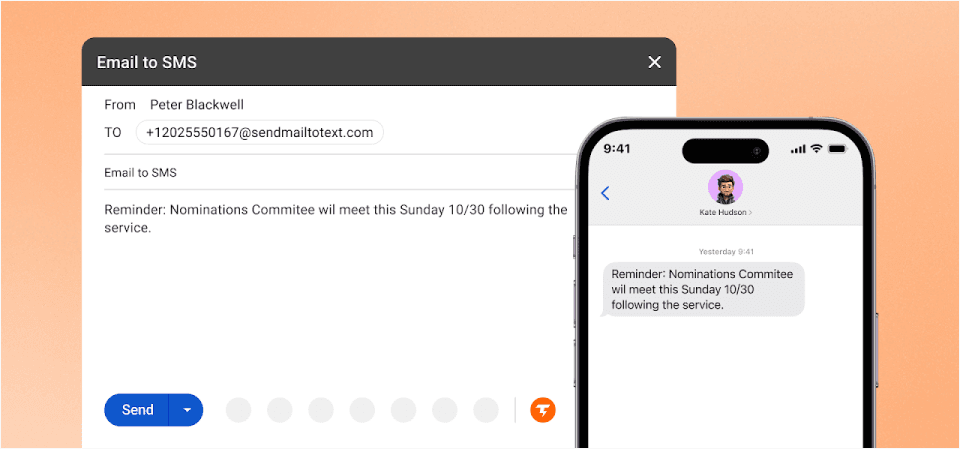
TextBolt is a business messaging platform built around a native email to SMS workflow that functions directly inside Gmail, Outlook, or any standard email client, so teams can keep sending from the tools they already use. Messages are routed over licensed US carrier connections, which gives teams predictable deliverability, compliant sender identity, and detailed per-message status reporting that manual send methods cannot match.
The platform handles both sending and receiving in one place. When you send an email, TextBolt turns it into a text message and delivers it to the recipient’s phone. When they reply, their response arrives in your inbox like any other email, so the full conversation stays in one view without a separate messaging app. That single-inbox flow also means field reps, support staff, and dispatchers can pick up SMS conversations without learning a new tool.
Key Features
- Native Gmail and Outlook integration
- Two-way SMS with replies in your inbox
- Shared team inboxes for collaborative conversations
- TCPA-ready consent management and opt-out handling
- Free tier for small teams
Pricing
Every TextBolt plan comes with a set number of monthly SMS credits, transparent per-segment rates, and no surprise carrier surcharges. Plans scale from solo users to enterprise teams, and annual billing knocks 20% off each tier.
| Plan | Monthly Price | Credits | Best For |
| Basic | $29/month | 500 | Solo practitioners, consultants |
| Standard | $49/month | 1,000 | Growing businesses, medical practices |
| Professional | $99/month | 2,500 | Multi-location operations |
| Enterprise | Custom | 5,000+ | Large organizations, healthcare networks |
Pros
- Gmail and Outlook integration works out of the box, with no plugins or SMTP setup required
- Transparent pricing with a real free tier that lets small teams launch without a credit card
- US-based support responds in business hours instead of routing through offshore tiers
- Built for business workflows such as shared team inboxes, opt-out handling, and delivery receipts
- Consent management and audit trails are surfaced in the dashboard, not buried inside an API
Cons
- Newer brand compared to legacy carriers and decade-old developer platforms
- Currently available only in the US and Canada
Best for: Teams that want email to SMS to “just work” without stitching together a carrier gateway or an API.
TextBolt’s built-in dashboard tracks every sent message with delivery status, timestamps, and reply threads. That visibility matters when you need proof an alert actually reached the recipient.
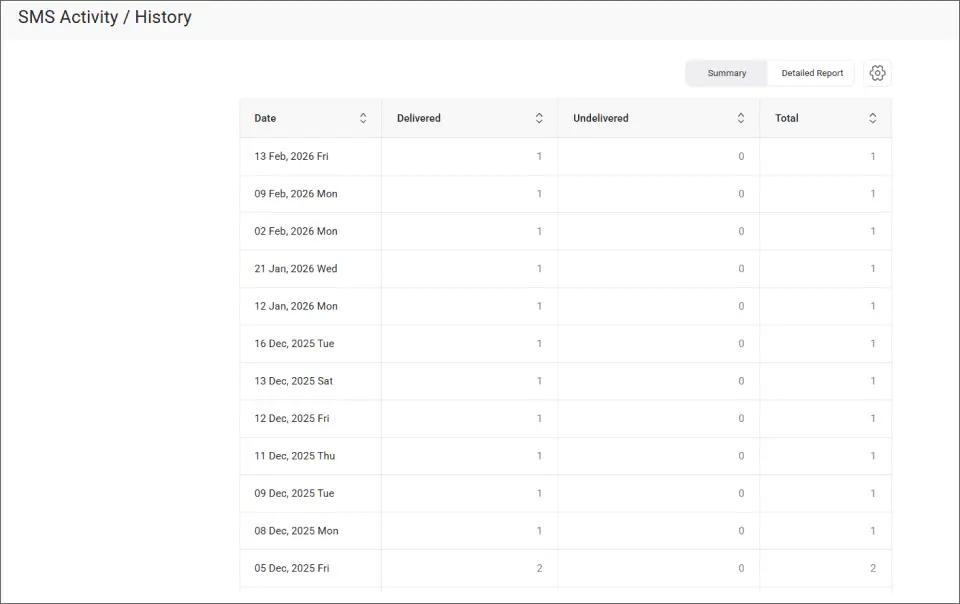
The Summary view rolls up daily totals so managers can spot patterns, such as weekday alert volume or days with unusually high undelivered counts.
Ready to Send SMS From Your Inbox?
TextBolt connects to Gmail and Outlook in minutes. No plugins, no coding, no carrier headaches.
2. ClickSend: Best for Pay-as-You-Go Pricing
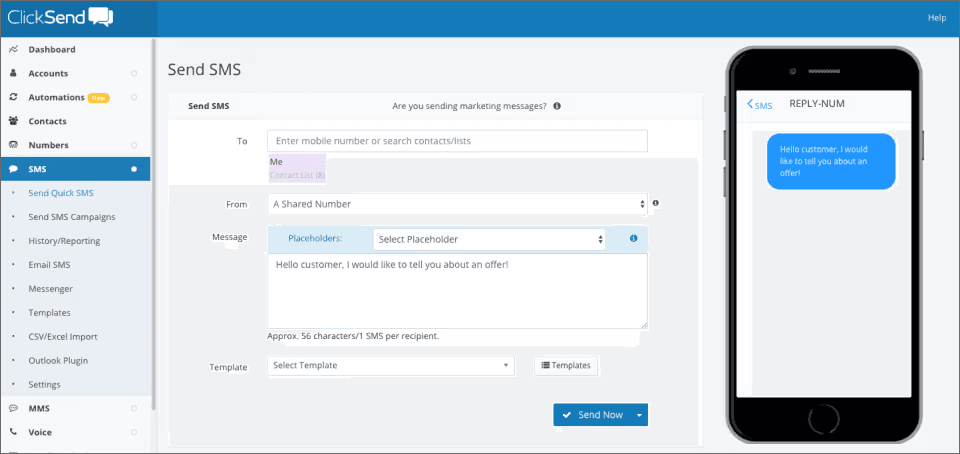
ClickSend is a global SMS provider with a dedicated email to SMS feature. There is no mandatory subscription, and pricing scales on a pure pay-as-you-go model that charges only for what you send.
Key Features
- Email to SMS coverage across 200+ countries
- REST API for programmatic message triggers
- SMTP gateway for direct mail-server integration
- 100% uptime guarantee backed by a public SLA
Pricing
Pay-as-you-go pricing starts at $0.02 per US SMS and drops to $0.0090 at 150,000+ messages per month. For more details, review our ClickSend pricing guide.
Pros
- Transparent per-message pricing with no monthly minimums or lock-in contracts
- Strong international reach covering 200+ countries for global SMS campaigns
- SMTP gateway option for teams that prefer direct mail-server integration
- Pay-as-you-go model scales cleanly with seasonal or unpredictable volume
Cons
- Interface can feel cluttered for non-technical users who only need basic sending
- US-based support hours are limited compared to regional providers
- The lowest per-message rates unlock only at 150,000+ messages per month
- Reporting lacks the drill-down filters that larger enterprise teams expect
Best for: Teams with unpredictable volume or international recipients.
3. Twilio: Best for Developers and API Control
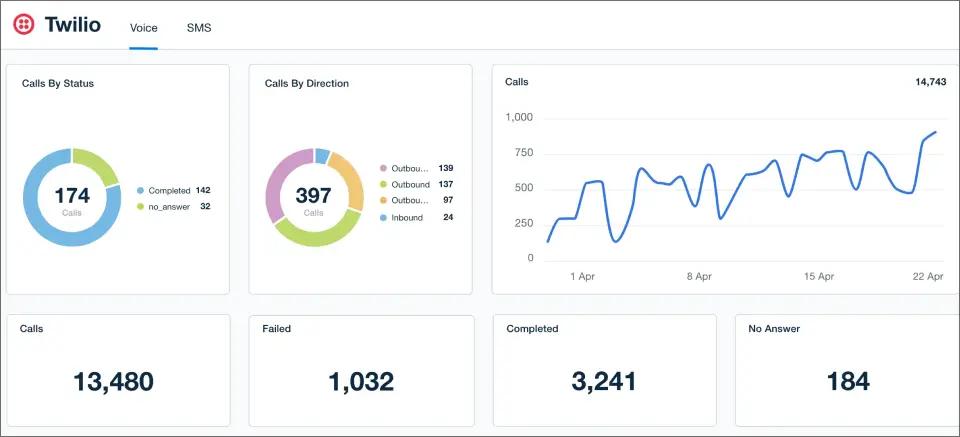
Twilio is the largest programmable messaging platform. Its SendGrid acquisition ties email and SMS into a single developer ecosystem, popular for companies building custom email to SMS workflows.
Key Features
- Programmable SMS API with code samples in every major language
- SendGrid email integration for unified messaging
- Deep analytics on delivery, engagement, and carrier performance
- Global carrier network with direct routes in most markets
- A2P 10DLC registration and toll-free verification support
Pricing
Pay-as-you-go at $0.0083 per US SMS, plus carrier surcharges of $0.0035 to $0.005 depending on the network. Phone numbers run $1.15 to $2.15 per month. Full breakdown available on Twilio’s website.
Pros
- Near-infinite flexibility with programmable SMS, MMS, voice, and email in one stack
- Excellent developer documentation with code samples in every major language
- Strong compliance tooling including A2P 10DLC registration and toll-free verification
- Global carrier network with direct routes in most major markets
- SendGrid integration consolidates email and SMS billing into a single account
Cons
- Requires developer resources to build even a basic email to SMS workflow
- No drag-and-drop email to SMS experience like TextBolt or Textmagic
- Carrier surcharges of $0.0025 to $0.005 stack on top of the headline price
- Higher-tier support is gated behind enterprise plans
Best for: Engineering teams building custom notification pipelines.
4. Textmagic: Best for Small Business Simplicity
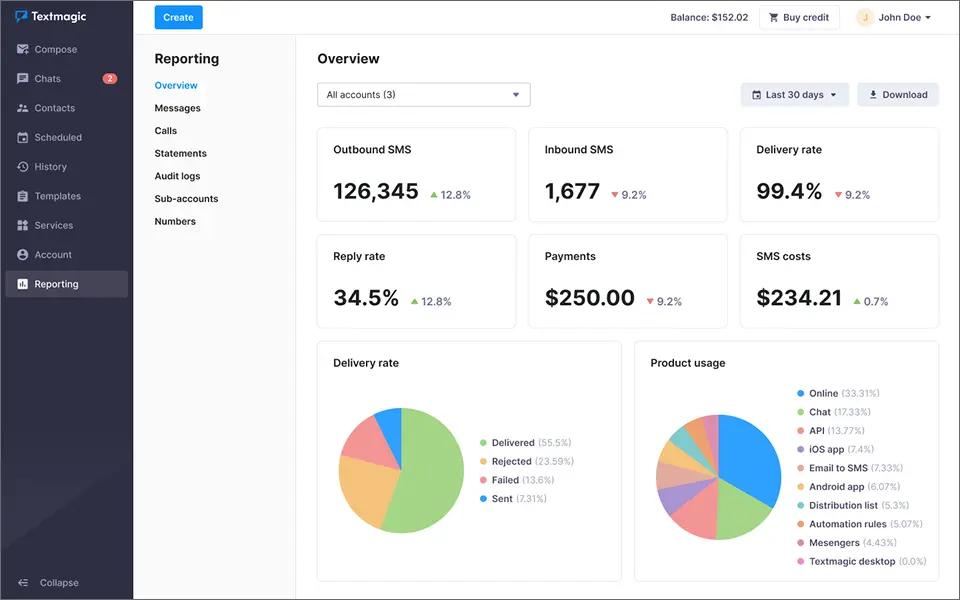
Textmagic markets heavily to small businesses with a no-plugins, no-setup email to SMS promise. You send an email to a special Textmagic address and it forwards the body as SMS.
Key Features
- Email to SMS from any email client with no plugins required
- SMS templates for repeatable message workflows
- Distribution lists for group messaging
- Delivery reports with per-message status tracking
Pricing
Starting at $34.50 for 500 SMS credits at $0.049 per message, with prepaid bundles scaling up to 200,000 units. For a deeper cost breakdown, see our Textmagic pricing guide.
Pros
- Dead-simple setup with no plugins, SMTP config, or API keys required
- Clean dashboard that non-technical teams can navigate without training
- Works with any email client, including Gmail, Outlook, Yahoo, and Apple Mail
- Free trial credits let new users test the full feature set before paying
- Scheduled send and template features support light marketing workflows
Cons
- Per-message cost of 4.9¢ is notably higher than Twilio or ClickSend at volume
- Limited API depth compared to developer-first platforms
- Reporting is functional but lacks drill-down analytics for large senders
- No native two-way threading inside the inbox view
Best for: Non-technical teams sending hundreds (not millions) of messages per month.
5. Notifyre: Best for Two-Way Email to SMS Threads
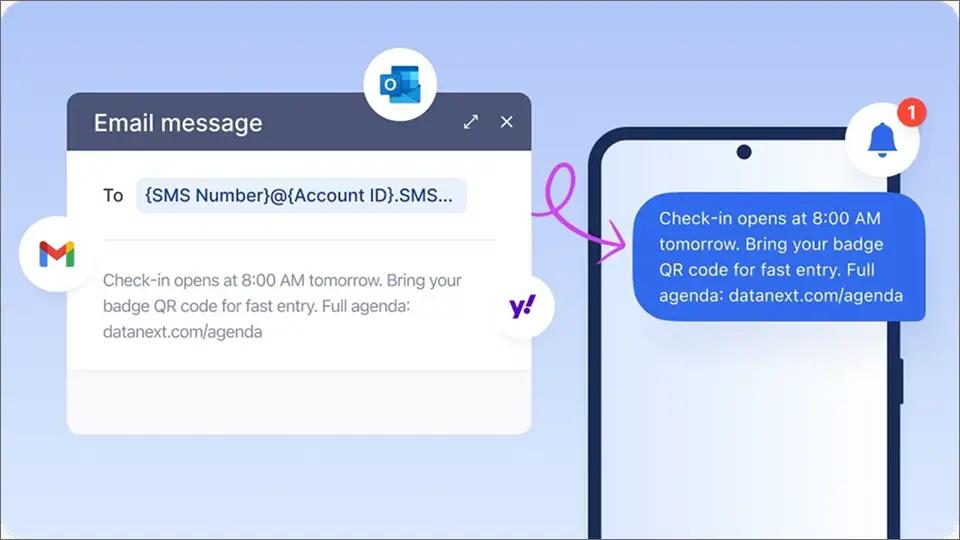
Notifyre specializes in keeping email to SMS conversations threaded. Replies from recipients come back as email, keeping the entire thread in one view.
Key Features
- Threaded two-way conversations that keep full history in one view
- Scheduled sends for timed message delivery
- Contact groups for organized recipient management
- Compliance tooling with consent logging and auto opt-out handling
Pricing
US SMS runs $0.02 per SMS part ($0.015 base plus $0.005 carrier surcharge), with each part covering 160 characters. US sending requires 10DLC registration at a one-time cost of $60.90, covering brand registration ($4.80), campaign registration ($16.90), three months of prepaid campaign maintenance ($34.20), and a 10DLC SMS number ($5.00). After setup, the recurring monthly cost is $16.40 for campaign maintenance and the number. For a full cost breakdown, see our Notifyre pricing guide.
Pros
- Strong reply handling keeps entire conversations threaded in a single view
- 24/7 support available through chat, email, and phone across global time zones
- Clean reporting dashboard with message-level delivery status and audit logs
- Scheduled sends and contact groups support recurring campaign workflows
- Compliance tooling handles consent logging and opt-out requests automatically
Cons
- Smaller ecosystem of third-party integrations compared to Twilio
- US market presence is newer than legacy providers, which some buyers weigh
- Slightly higher starting cost
- MMS and rich-media features are more limited than marketing-first platforms
Best for: Customer service or sales teams that need replies to land back in email.
6. SlickText: Best for SMS Marketing Integration
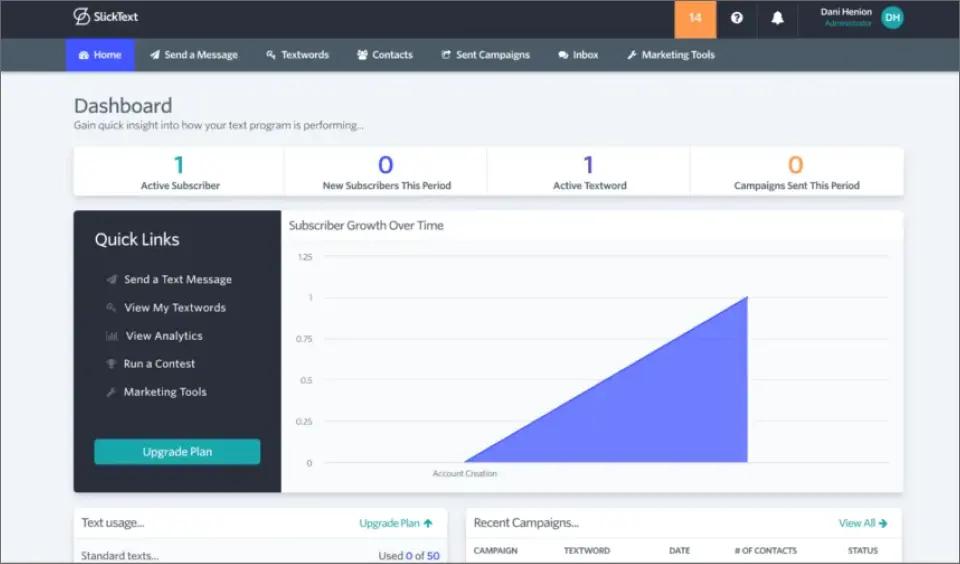
SlickText is primarily an SMS marketing platform with an email to SMS add-on. If you run keyword campaigns or drip automations, the email to SMS layer keeps those connected to your marketing stack.
Key Features
- Keyword campaigns for opt-in list building
- Drip automation for sequenced follow-up messages
- MMS support for rich media beyond plain text
- Email to SMS add-on integrated into the marketing stack
- Pre-built TCPA opt-in flows and shortcode support
Pricing
Plans start at $29 per month for 500 credits (Starter) and scale through Professional ($49/mo, 1,000 credits), and Business ($79/mo, 2,000 credits). All paid plans include free incoming texts, rollover credits and live support.
Pros
- Great for marketing workflows with keyword campaigns and drip automations
- Strong compliance guidance, including pre-built TCPA opt-in flows
- Easy opt-in management through shortcodes and hosted web forms
- MMS support for richer promotional messaging beyond plain text
- Solid template library aimed at retail, nonprofit, and event marketers
Cons
- Not ideal for transactional or alert-style email to SMS use cases
- Email to SMS is a secondary add-on rather than a core platform feature
- API access is limited on lower tiers, forcing upgrades for integrations
- Monthly credit model penalizes teams with uneven sending patterns
Best for: Brands already running SMS marketing that want email to SMS in the same tool.
7. Ozeki SMS Gateway: Best On-Premise Solution
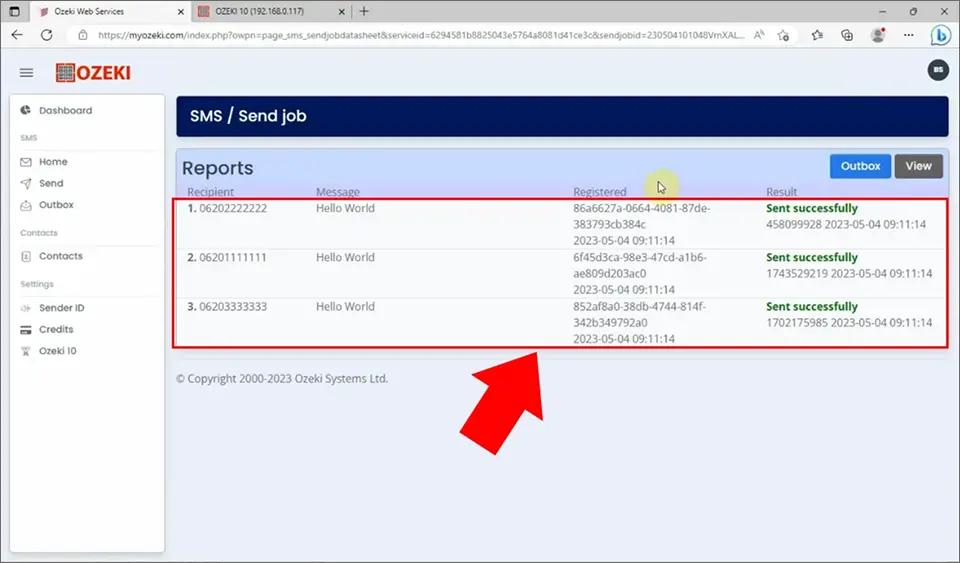
Ozeki is a self-hosted SMS gateway you install on your own server, often connected to a GSM modem or SIP trunk. It can receive email via SMTP and convert each message into an SMS.
Key Features
- On-premise deployment with full data sovereignty
- SMTP-to-SMS conversion for internal email systems
- HTTP API for custom application integration
- GSM modem and SIP trunk connectivity options
Pricing
One-time license fee based on message throughput, starting at EUR 1,490 for 5 messages per minute (1 connection, 10 users) and scaling to EUR 8,990 for 1 message per second (25 connections, unlimited users). All prices are one-time fees in EUR with no recurring per-message charges when using your own SIM or SIP trunk.
Pros
- Full data sovereignty since the gateway runs entirely on your own infrastructure
- No per-message carrier fees when paired with your own SIM or SIP trunk
- HTTP API and SMTP support make it flexible for internal system integrations
- Modem connectivity options help in locations with limited carrier presence
Cons
- Requires IT expertise to deploy, configure, and maintain on-premise
- No cloud dashboard, which limits remote team access and mobile visibility
- Updates and security patches become the customer’s ongoing responsibility
- Hardware and redundancy costs add up for high-availability deployments
- Entry license at EUR 1,490 makes it impractical for small businesses or low-volume senders
Best for: Enterprises with strict data residency requirements or existing telecom infrastructure.
8. Plivo: Best for Developer-Friendly SMS at Scale
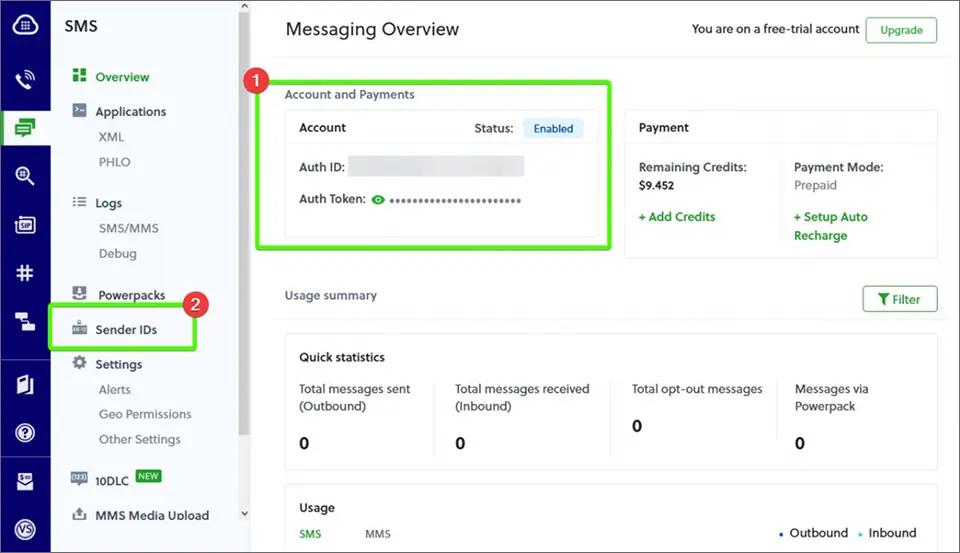
Plivo is a cloud communications platform with a programmable SMS API that supports email to SMS routing through its developer toolkit.
Key Features
- Programmable SMS API with direct carrier connections in 190+ countries
- 10,000+ messages per second throughput with 99.99% platform uptime
- Built-in Powerpack for intelligent number pooling and delivery optimization
- Integrations with Shopify, Salesforce, HubSpot, and other CRMs
- HIPAA, GDPR, SOC 2, and PCI DSS compliance certifications
Pricing
Pay-as-you-go at $0.0077 per US SMS for long codes and short codes, and $0.0079 for toll-free. Carrier surcharges range from $0.0035 (AT&T) to $0.005 (US Cellular) per outbound message.
Pros
- Enterprise-grade compliance with HIPAA, SOC 2, and PCI DSS certifications
- Powerpack feature handles number pooling and intelligent routing automatically
- Phone number costs are significantly lower than most competitors
Cons
- Requires developer resources to build and maintain email to SMS workflows
- No plug-and-play email to SMS experience like TextBolt or Textmagic
- Carrier surcharges add $0.0035 to $0.005 on top of the base rate
- Support response times on lower tiers can lag behind dedicated SMS providers
Best for: Engineering teams that need high-throughput, low-cost SMS with full API control.
9. EZ Texting: Best for Bulk Email to SMS Campaigns
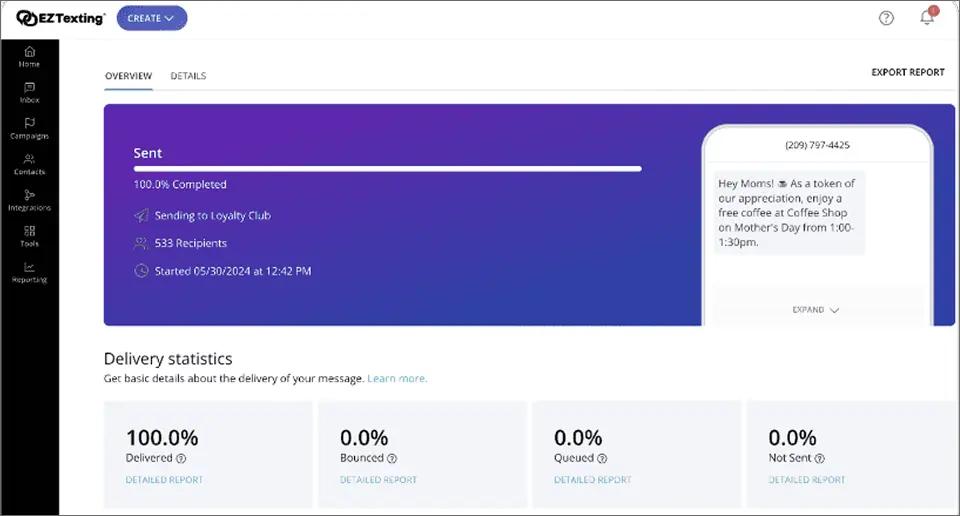
EZ Texting focuses on high-volume outbound campaigns and includes an email to SMS function for occasional users.
Key Features
- Bulk send tools for high-volume outbound campaigns
- Contact management with list segmentation
- Shortcode and keyword support for marketing opt-ins
- Basic API for programmatic message triggers
Pricing
The Launch plan starts at $25 per month for 500 credits and one user, per current rates. For a detailed breakdown, see our EZ Texting pricing guide.
Pros
- Simple bulk workflows suited to occasional mass SMS blasts
- Keyword campaigns and shortcode support for marketing opt-ins
- Template library reduces setup time for recurring campaign types
- Contact management tools handle segmentation for mid-size lists
- MMS support extends reach beyond plain text messages
Cons
- Email to SMS is a secondary feature rather than a core product
- Credit-based pricing can waste unused balance in slow months
- API depth is limited compared to Twilio or ClickSend
- Lower-tier plans cap user seats and advanced features
Best for. Teams running occasional mass SMS blasts triggered from email.
10. Sinch: Best for Enterprise-Grade Global SMS
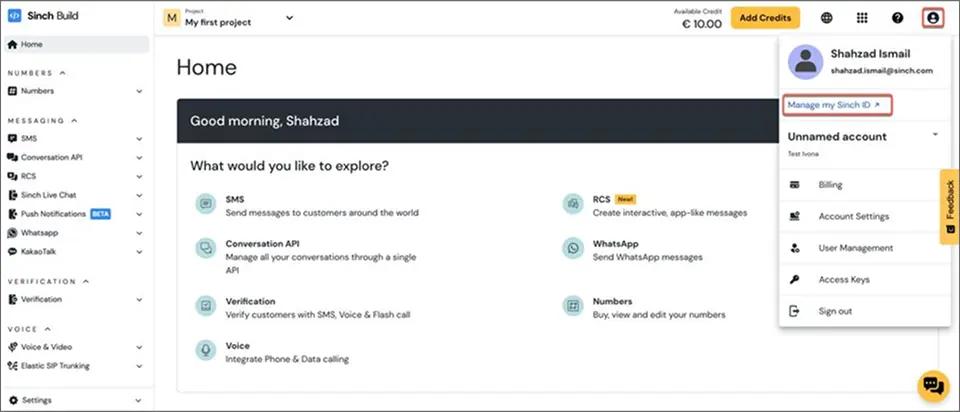
Sinch is an enterprise cloud communications platform with over 600 direct operator connections and 160 million active phone numbers worldwide. Its Conversation API supports SMS, MMS, RCS, WhatsApp, and email in a single integration, making it a strong fit for businesses that need multi-channel messaging alongside email to SMS.
Key Features
- 600+ direct carrier connections across 190+ countries
- Conversation API covering SMS, MMS, RCS, WhatsApp, and email
- 10DLC, toll-free, and short code support for US messaging
- GDPR compliance and MEF A2P Code of Conduct certification
Pricing
Pay-as-you-go at $0.0078 per US SMS for 10DLC and toll-free, and $0.009 for short codes. Carrier surcharges apply on top.
Pros
- Massive global reach with 600+ direct operator connections and tier-1 routing
- Multi-channel API consolidates SMS, RCS, WhatsApp, and email in one platform
- Competitive per-message rates at $0.0078 for US SMS
- Enterprise-ready integrations with major CRM and marketing platforms
- RCS support future-proofs messaging beyond plain SMS
Cons
- Platform complexity is overkill for teams that only need basic email to SMS
- No plug-and-play email to SMS setup like TextBolt or Textmagic
- Carrier surcharges are not included in the headline rate
- Documentation and onboarding lean toward enterprise buyers over small teams
Best for: Enterprise teams that need global SMS reach with multi-channel messaging from a single platform.
Feature Evaluation Matrix
The quick table above is a pricing snapshot. This section is the deeper lens that most buyers skip. It covers the capability areas that separate reliable business SMS from a free gateway hack, plus the pricing bands you should expect at your volume.
1. Deliverability and Uptime
Deliverability depends on carrier relationships. Free carrier gateways are being deprecated. Any provider still routing through @txt.att.net style addresses is unreliable in 2026.
Ask your provider which upstream carriers they hold direct routes with. Reputable platforms publish uptime statistics and let you audit every message through a delivery dashboard.
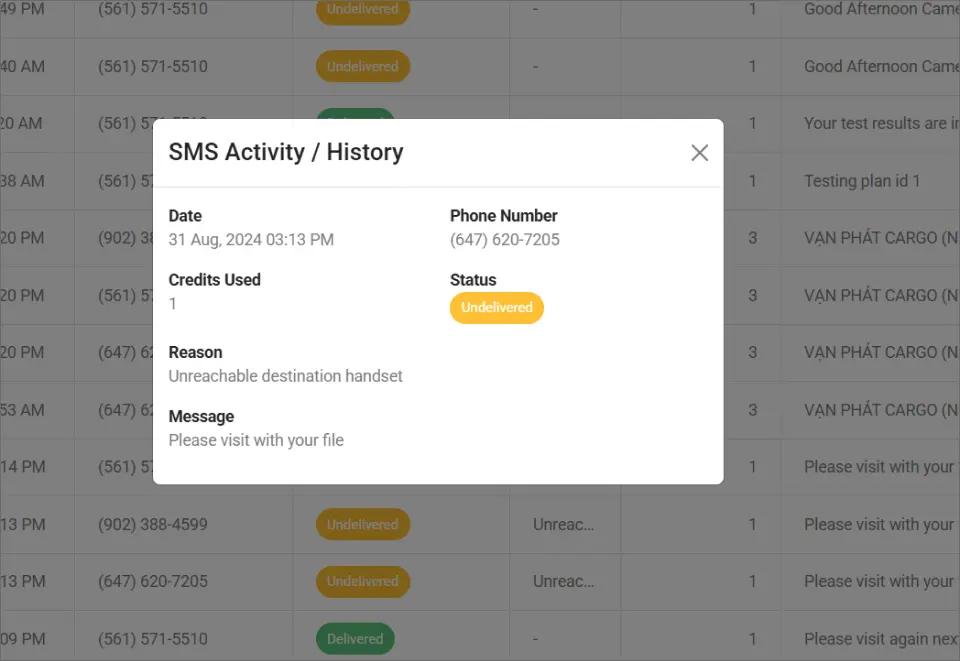
A drill-down on an undelivered message reveals the exact reason, such as an unreachable handset or carrier filtering, which helps you fix the root cause instead of guessing.
2. Two-Way Messaging
Look for services that route SMS replies back to your inbox as standard emails. Without it, email to SMS is one-way, and customer replies vanish into a black hole.
3. Compliance
The FCC TCPA requires prior express written consent for most marketing texts. The FCC publishes the current TCPA rules. The Federal Trade Commission accepts consumer complaints about unwanted texts.
If you handle protected health information, the US Department of Health and Human Services provides HIPAA guidance on electronic patient communication. Choose a provider that surfaces opt-out handling, consent logging, and audit trails.
4. Scalability and Growth Path
Your messaging needs will change as your team grows. A provider that works for 200 messages a month should still perform at 20,000 without forcing a platform migration. Look for volume-based pricing tiers, multi-user access, and the ability to add automation or programmatic triggers when your workflows demand it.
5. Real-World Use Cases
- IT and DevOps alerts. Route PagerDuty, Datadog, or Nagios emails to on-call engineer phones.
- Appointment reminders. Healthcare, dental, salon, and legal practices send automated reminders from scheduling tools.
- Field team coordination. Dispatchers send work orders and route changes as SMS from email.
- Emergency notifications. Schools and municipalities extend email alert systems to text, modeled after the FCC’s public Wireless Emergency Alerts program.
- Customer service follow-ups. Support reps escalate ticket updates to SMS without leaving their helpdesk.
For a broader view of how SMS and email stack up as channels, read our SMS marketing vs. email marketing comparison.
How to Choose the Right Email to SMS Service
Once you have the provider shortlist, use this four-step framework to make the final call rather than defaulting to the cheapest headline price.
1. Estimate Your Monthly Volume
Under 1,000 messages a month favors subscription plans that bundle features and credits into a flat monthly rate. Over 10,000 favors providers with volume-based pricing tiers that lower your per-message cost as you scale. This single decision narrows your shortlist faster than any other criterion.
2. Prioritize Email Client Compatibility
The whole point of email to SMS is sending texts from the tools your team already uses. Make sure the provider works natively with your email client, whether that is Gmail, Outlook, or another platform. TextBolt, for example, plugs directly into both Gmail and Outlook with no extra software, so your team can start sending and receiving SMS without switching apps or learning a new dashboard.
3. Check Compliance Fit for Your Industry
Healthcare, finance, and legal need HIPAA and TCPA tooling. Consumer marketing needs strong opt-in flows, keyword automation, and documented opt-out handling. Ask for consent logging and audit trails during the free trial, not after signing the contract.
4. Test the Two-Way Flow End to End
Send a test message and reply from the recipient’s phone. If the reply does not land in your inbox, move on. TextBolt lets you run this test for free from Gmail or Outlook with no setup.
Stop Comparing, Start Texting
Pick a plan, connect your inbox, and send your first SMS today. TextBolt makes it that simple.
Which Email to SMS Service Should You Pick?
Free carrier gateways are gone, and businesses that relied on them need a proper replacement. The right email to SMS service depends on your volume, budget, and how much setup your team can handle. Developer heavy teams may lean toward API-first platforms, while most business users want something that works directly from their inbox without extra tools or coding.
TextBolt is built for that second group. It connects natively to Gmail and Outlook, handles two-way messaging, and includes compliance tooling out of the box. You can start for free trial now.
Frequently Asked Questions
Is email to SMS secure?
Yes. Business email to SMS providers use TLS encryption, secure login, role-based access, and audit logs to protect your messages. For healthcare or finance, choose a provider with HIPAA-ready infrastructure and consent tracking.
Do I need a special email address to send SMS?
No. Modern email to SMS services let you send from your normal work email. The provider handles the conversion on the backend and routes replies back to you as standard emails.
Can I receive SMS replies in my email inbox?
Yes, with most providers on this list. Two-way email to SMS routes replies back to your inbox as standard emails, which is the key feature to test during your free trial or pilot.
What is the difference between email to SMS and an SMS API?
Email to SMS is designed for humans composing messages in an email client. An SMS API is designed for software to send messages programmatically. Many providers, including TextBolt, offer both side by side.